
Research
Our group investigates how developing tumors co-evolve with their surrounding microenvironment and how this dynamic interplay shapes disease progression. Using colorectal cancer as our primary model, we dissect the bidirectional crosstalk between stroma and tumor epithelial cells during tumor initiation, growth, and metastatic dissemination. By studying both cell-intrinsic programs and non–cell autonomous signals, we aim to clarify how stromal compartments instruct epithelial behavior and, in turn, how malignant cells reprogram the stroma to create pro-tumorigenic niches.
Our approach integrates single-cell RNA sequencing, organoid systems, mouse models, and high-resolution imaging to map cellular states and spatial organization. Where possible, we couple discovery with perturbation, using targeted genetic and pharmacological tools in vitro and in vivo, to define causality and therapeutic potential.
Our long-term goal is to establish a mechanistic framework for stromal contributions to cancer and therapy response, ultimately informing strategies that limit drug resistance and metastasis, bridging fundamental biology with translational impact.
Projects
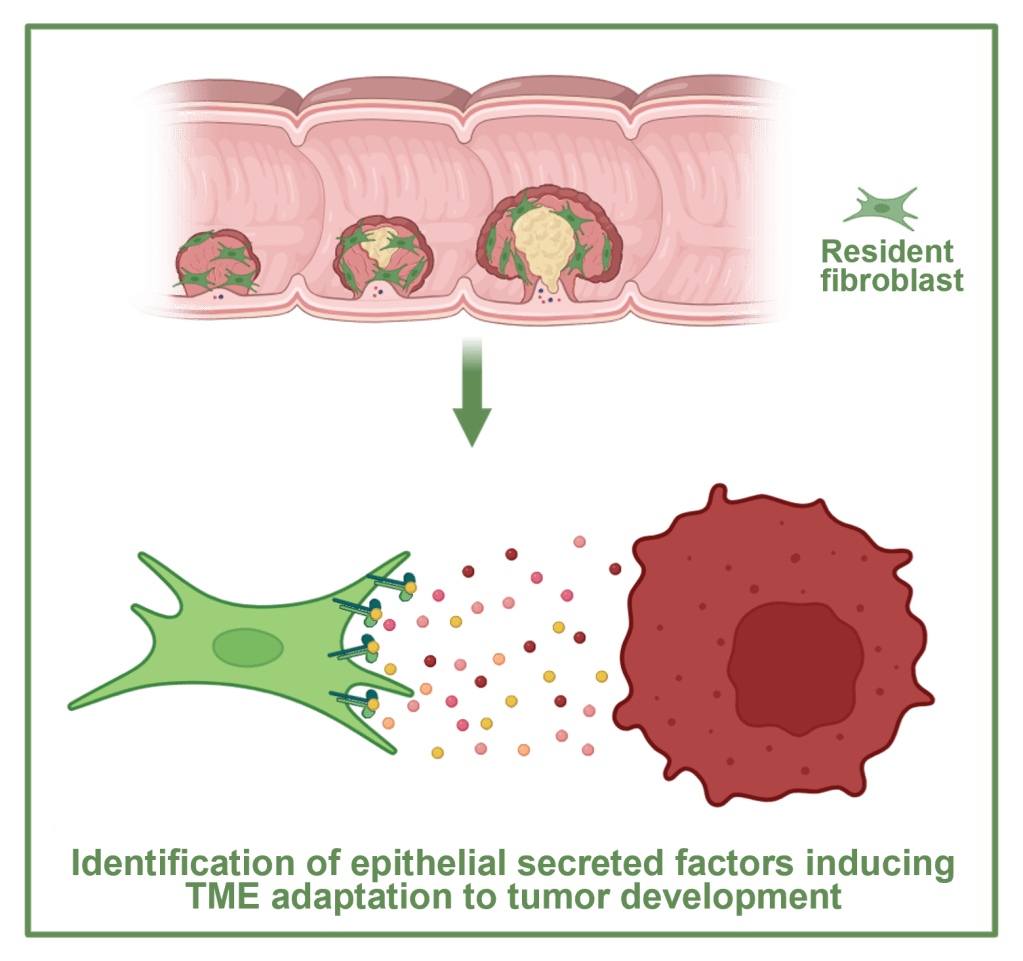
Local crosstalk in tumor onset. Epithelial transformation induces prompt responses in surrounding microenvironment. This research line aims to characterize the molecular crosstalk between intestinal epithelial cells and fibroblasts during tumorigenesis, with the goal of identifying novel tumor vulnerabilities and potential therapeutic targets within the stromal compartment. Using single-cell transcriptomics, organoid–fibroblast co-cultures, and mouse models, we resolve fibroblast heterogeneity and test causal interactions via genetic and pharmacological perturbations. Our goal is to uncover tumor vulnerabilities and therapeutic targets within the stromal compartment.
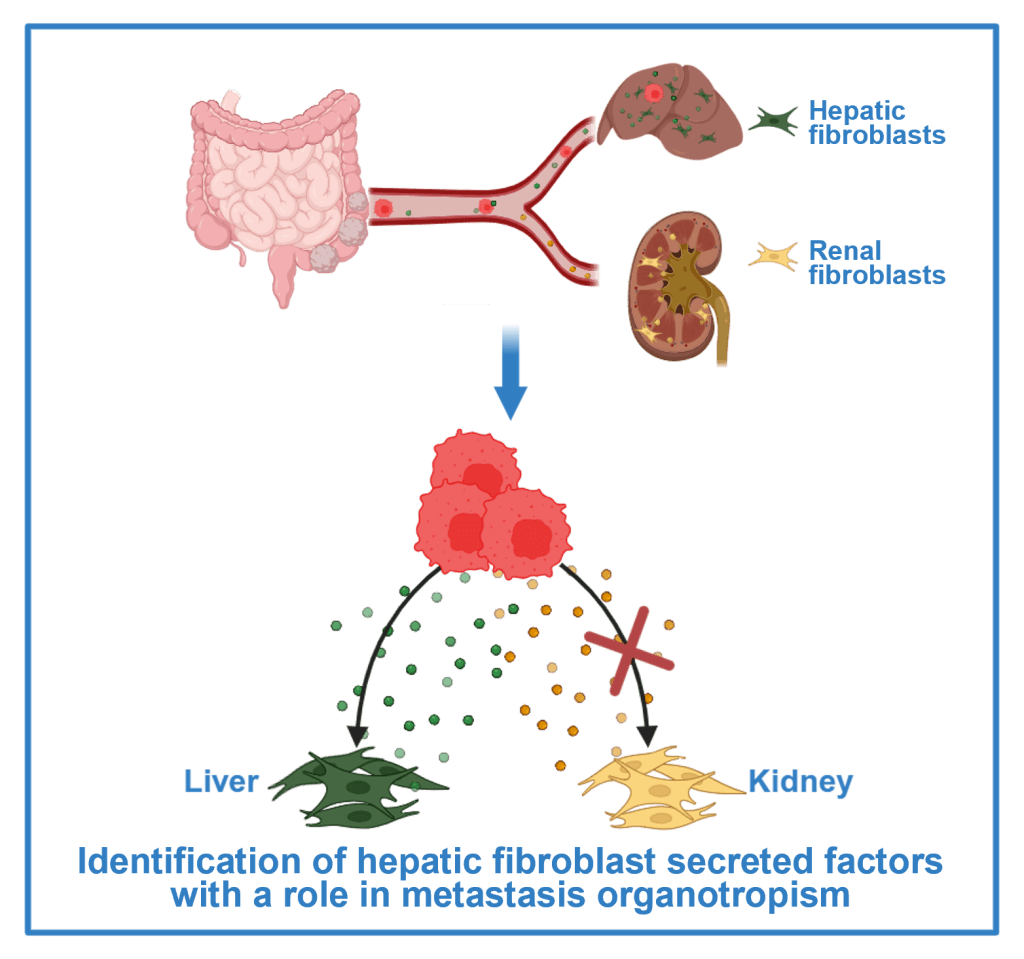
Pre-metastatic inter-organ crosstalk. The developing tumor releases circulating factors and extracellular vesicles that condition distant tissues. This project charts how colorectal cancer–derived signals prime liver fibroblasts to establish a pre-metastatic niche that supports organ-specific colonization. We combine proteomics of tumor secretomes, profiling of liver-resident and recruited fibroblast subsets by single-cell and bulk transcriptomics, and mouse model perturbations to define causal pathways. By identifying fibroblast programs that remodel the hepatic microenvironment, we aim to uncover biomarkers and therapeutic strategies that prevent or reverse metastatic seeding.
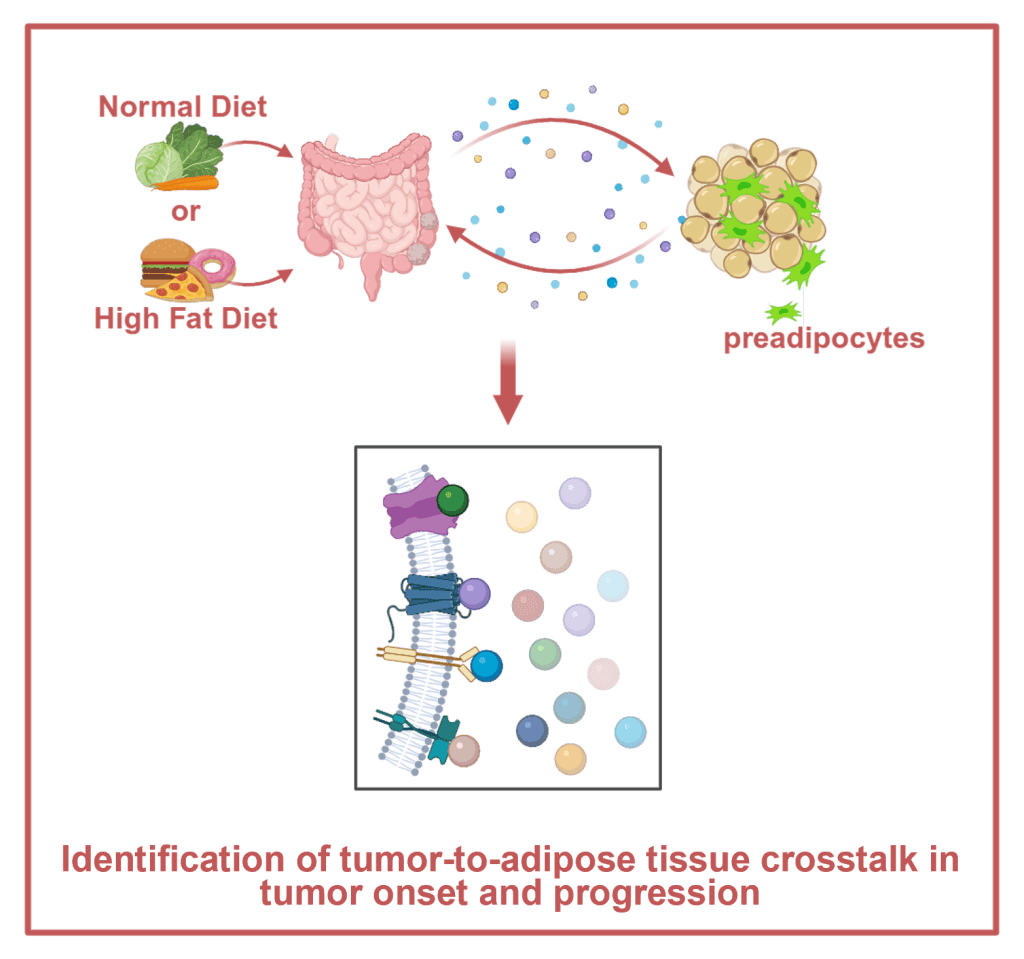
Tumor-to-adipose tissue crosstalk. Tumor development releases factors that reprogram pre-adipocytes, alters differentiation, lipid metabolism, and inflammatory outputs with consequences for tumor growth and systemic physiology. This project investigates how colorectal cancer secretomes influence adipose progenitors across depots. We combine organoid–preadipocyte co-cultures, single-cell and bulk profiling, and in vivo models to map pathways driving adipose remodeling. By defining tumor-educated pre-adipocyte states and regulatory nodes, we aim to therapeutically disrupt tumor–adipose crosstalk and improve patient outcomes.

